


This year at VTEX Day 2026, we're showing some of what we've been building at deco: the deco CMS, a new infrastructure stack, autonomous content, journey optimization agents, and our AI platform. Still very much in progress, but real enough to ship.
Here is everything we're shipping.
1. deco CMS: our new agentic CMS
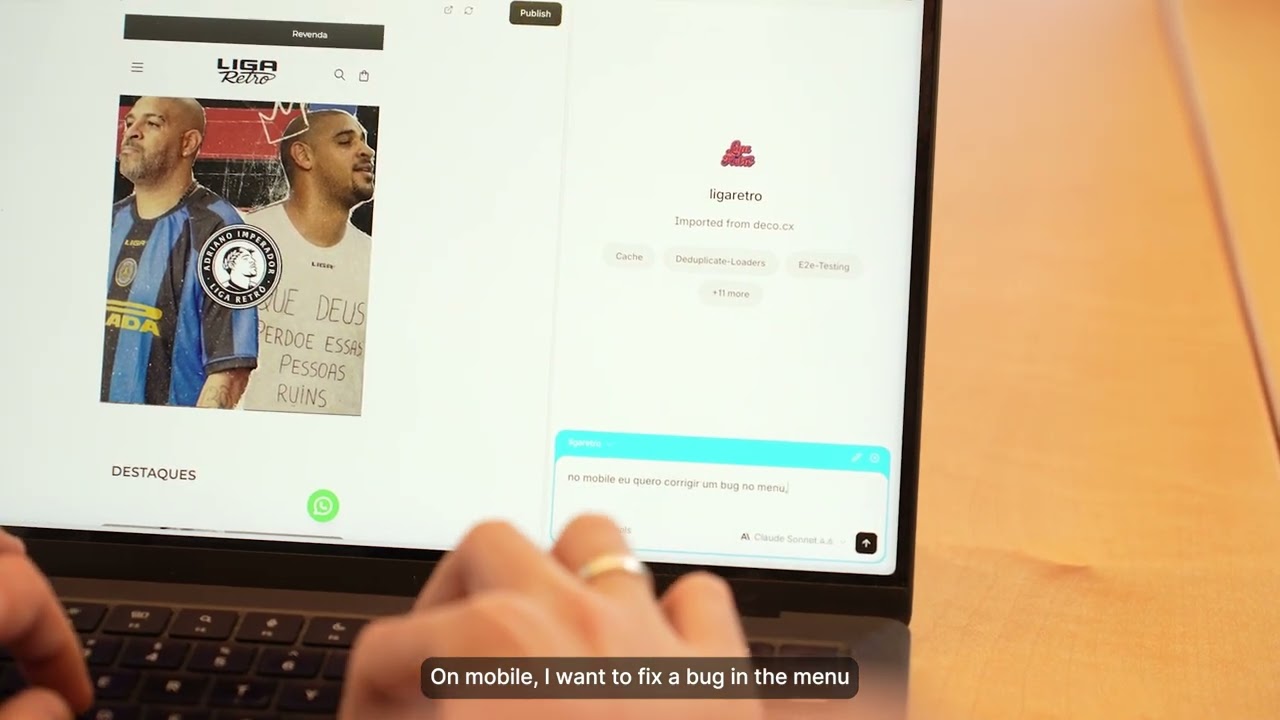
The new CMS puts your live site and an AI chat side by side. Instead of filing a ticket with your agency and waiting for a developer to pick it up, you describe the problem or feature you want, and the agent implements it directly.
This is not a generic chatbot. The agent has full context of your codebase, your e-commerce platform, your images, and your site files. Designers and marketing teams can fix bugs and ship features without waiting on engineering. You can also connect MCPs from various platforms to give the agent additional context, tools, and database access.
In practice, most visual bugs get resolved this way. When the same bugs go to agencies, they enter backlogs, ticket systems, and approval processes that routinely take a week or more.
Traditional bug fix flow
- Report bug to agency
- Enters ticket system and backlog
- Dev picks it up days later
- Approval process before deploy
- 1 week+ turnaround
deco CMS flow
- Describe the problem in chat
- Agent finds the root cause in code
- Fix applied in a preview environment
- Review and merge via pull request
- Minutes, not weeks
Safety is built in. Every change goes through a preview system in a safe environment. You can open pull requests and ask the AI to review its own work. Core CMS features like props editing, image management, and the component library still work in the new version.
2. Site Diagnostics Agent
When we started managing hundreds of stores, we realized most sites don't face drastic, visible problems all at once. Instead, they degrade silently across many different areas over time. To address this, deco built a super agent that deploys other AI agents to research seven different dimensions of any site.
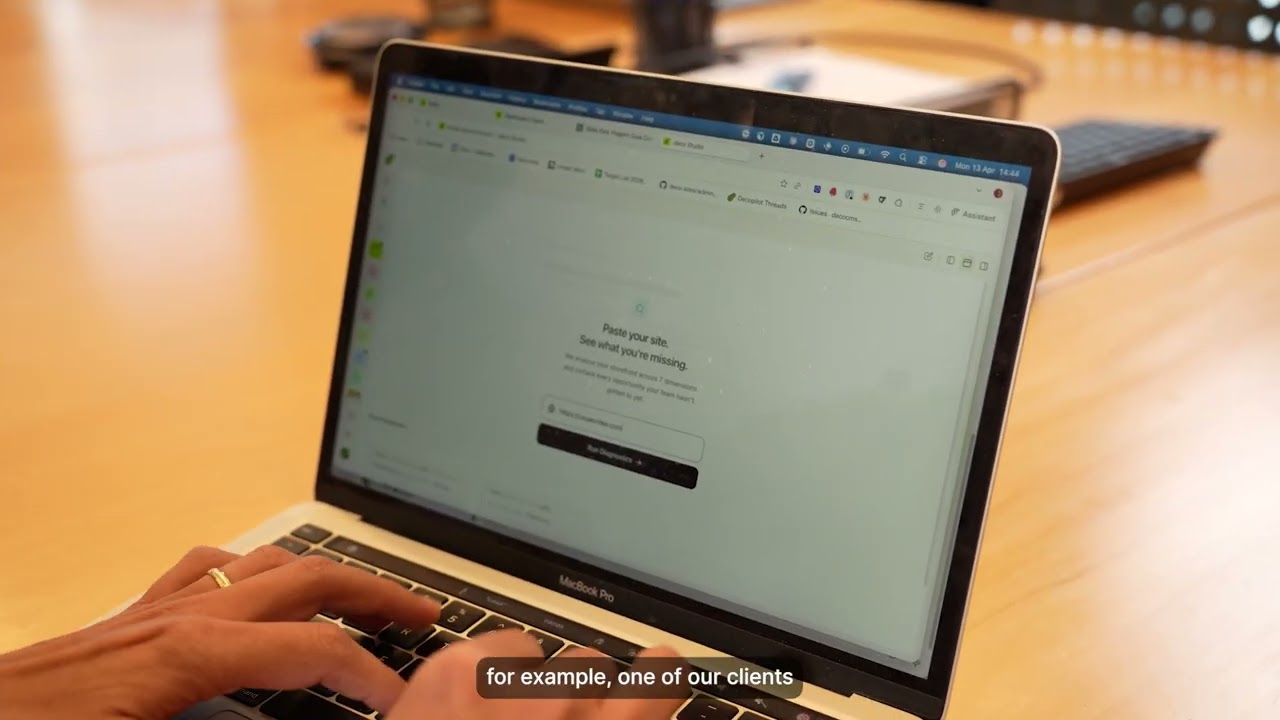
You enter any URL (deco sites have more data available, but it works on any site). The system spends 10 to 15 minutes analyzing indexed products, organic traffic, page structure, and more. It surfaces thousands of opportunities, many of which are a single fix that resolves multiple issues at once.
The workflow becomes a closed loop: run diagnostics, identify issues, let agents fix them, have the agency review the changes. Agents are moving from copilot mode to functioning as actual teams that solve problems end to end.
3. Autonomous Blog
Organic content is one of the hardest problems in retail. It is competitive, expensive, and labor-intensive enough that many brands give up. deco's autonomous blog is designed to run end-to-end on its own. Humans stay fully in control. You can edit, rewrite, or approve anything, but nothing requires you to.
How it works
The agent picks a keyword, selects a long-tail variant, creates a draft, generates images, writes copy, does research, and adds rich components. It writes content in the brand's language, checks the catalog for relevant products, and can even add products to cart directly from within blog posts.
Unlike a WordPress blog that sits outside the purchase journey, this blog is already inside it. Readers can browse content and buy products without leaving the page. A super admin panel gives humans full editing control: delete, add, edit content, and swap products from the catalog before approving publication.

4. New Infrastructure Stack
Keeping infrastructure costs under control has been an ongoing challenge. We tried incremental improvements, but the ceiling was low. The breakthrough came from starting over: a clean-slate rewrite of the stack.
The new stack moves away from Deno and Preact. It requires a full site reimplementation, but with agent-assisted migration, the process took 2.5 weeks for Casa & Video, which is already live in production.
The result is a faster site and a cheaper deco bill. Since faster sites tend to convert better, revenue usually follows. Migration takes 2 weeks to 1 month, and we help with the porting process. We've built dedicated skills and tooling to make it easier.
5. Journey Optimization Agents
We built these agents with FARM Rio as a bespoke project, tuned to their catalog, brand rules, and merchandising logic.
PLP Agent (Product Listing Pages)
This agent is already running in production at FARM Rio. The problem it solves: brands have many products across many collections, and it is humanly impossible to keep product ordering updated. The hypothesis is that high-conversion products are buried low in category pages, leaving revenue on the table.
The PLP agent runs hourly across multiple collections. It uses machine learning algorithms to suggest new ordering based on brand-specific rules. The ordering respects visual merchandising requirements (color palette, patterns) and makes decisions that are close to what a human merchandiser would make.
Smart reordering
Products moved up to 51 positions based on availability and conversion rules. Changes are applied directly to VTEX.
Visual Merchandising aware
Reorganizes products without breaking the brand's color palette, patterns, or display criteria.
Runs hourly
Agents run on a recurring schedule across all collections, with full analytics showing history of every run and proposed change.
Confirmed sales impact
Already in production with 1000+ alterations. Expanding to all categories. Exact numbers are under NDA but sales impact is confirmed.
PDP Agent (Product Detail Pages)
The PDP agent is the twin of the PLP agent, focused on improving product page content using open internet data. It selects underperforming products from brand analytics, then looks at what people say on Instagram about those products: communication style, influencer arguments, fit details, wearability, fabric feedback.
It uses this social listening data to update product descriptions with real-world language. Fit, wearability, and fabric details come from actual customer feedback rather than generic copy. The agent can also generate images, placing a model wearing the product in different scenarios based on how people actually use and talk about the item. Everything goes through human approval before publishing.
If you'd like agents like these for your own store, come find us at the VTEX Day booth. Every implementation is different, and we'll scope it around your catalog and brand rules.
6. deco Studio: our AI Platform
Everything shown above was built on top of deco Studio, our Enterprise AI platform. Studio goes beyond e-commerce. It's designed for creating agents and AI automations in any sector. We've been working on this for more than a year, and Studio is the result of everything we've learned along the way.
What Studio includes
The key idea behind Studio is context engineering: AI generates value when it has the right context about your brand, data sources, and business rules. A contract assistant connected to Google Drive can answer questions about any company contract. A sales agent connected to HubSpot can draft follow-ups grounded in real pipeline data. A weekly reporting agent can pull from your analytics stack and deliver a summary every Monday morning.
Slide Builder
One of the agents built inside Studio is an agentic presentation builder. It works like Google Slides but is fully agent-driven. It injects company context, your Design System, and diagnostic data. You can connect Google Analytics and generate a branded presentation of the last 7 days with one prompt. Presentations can be one-off or recurring templates (such as a monthly analytics report).
Summary: What Shipped
Hackathon for E-Commerce Developers
We're also launching a hackathon for e-commerce developers who want to learn AI tooling. The HackathonOS platform is live at decocms.com/hackathon. The same platform is running the SENAI hackathon with 27,000 participants. The e-commerce edition uses deco tools alongside Claude Code and other AI development tools.
Try it at VTEX Day or online
Visit the deco booth to run a free site diagnostic, see the deco CMS live, or sign up for the e-commerce hackathon.


